
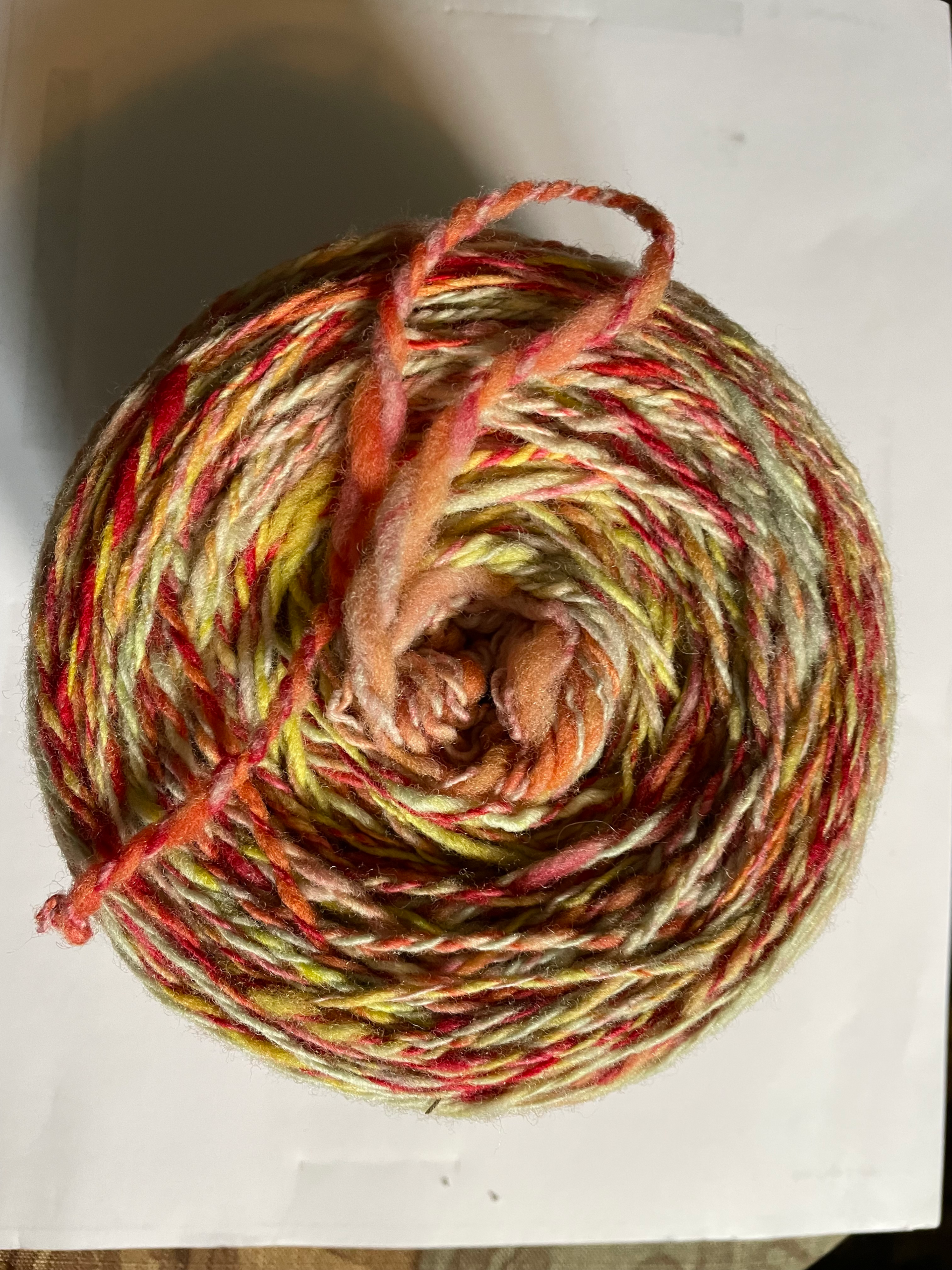
There is a moment in making when the material tells us something we did not plan to hear.
The yarn drapes differently than we expected. A fabric holds its shape when we wanted it to soften. A surface catches the light and changes the whole feeling of a piece. We can treat that moment as a problem to correct, or we can pause and ask what the material is showing us.
That pause is where this idea begins: let fiber be fiber.
A material is more than a color
Color often draws us in first. We see a beautiful skein, a piece of cloth, or a handful of loose fiber and imagine what it could become. But color is only one part of the conversation.
There is also weight. Texture. Stretch. The way a strand bends, the way a surface feels against the skin, and the way the finished piece moves. Those qualities influence what we can make and how we experience it.
Two yarns can look similar on a shelf and create very different fabrics. Even the same fiber can behave differently depending on how it is prepared, spun, and constructed. A fiber label offers a starting point; it does not tell the whole story.
Listen before deciding
Working with a material’s character does not mean giving up our intentions. It means allowing observation to shape them.
Before committing to a project, hold the material. Bend it. Look at it in different light. Make a small sample using the technique you intend to use. If the finished work will be washed, wash the sample according to the material’s care instructions and let it dry before judging the result.
Ask a few simple questions:
- Does it hold a shape or fall into folds?
- Does it stretch, and how does it recover?
- Is its surface smooth, crisp, fuzzy, or uneven?
- What changes after washing?
- Which qualities do I want to bring forward?
The sample is not simply a test we pass before making the real thing. It is part of the creative work. It gives us something concrete to respond to.
Difference can be useful
It is tempting to judge a material against the one we already know. We might want every yarn to have the same bounce, every fabric to have the same softness, or every thread to produce the same clean line.
But difference is often what makes a piece interesting.
A firm material might bring structure to a sculptural form. A fluid fabric might give movement to something worn. An uneven strand might introduce a rhythm that a uniform one would never produce. A rough texture might be exactly right for an object that is meant to be seen and handled in a particular way.
None of those qualities is automatically a virtue or a flaw. Their usefulness depends on the purpose of the piece.
The question becomes less “Is this a good material?” and more “What is this material good for—and what do I want to explore with it?”
Technique is part of the conversation
Fiber does not work alone. Our choices change what it becomes.
A tighter or looser construction can change the feel of a fabric. A different stitch, weave, or combination of materials can bring one quality forward and quiet another. Finishing can change the result again.
That is why curiosity matters as much as a recipe. Instructions can guide us, but the material in our hands still deserves our attention. When something behaves unexpectedly, a small experiment may teach us more than forcing the original plan.
Sometimes we adjust the technique. Sometimes we choose another material. Sometimes the surprise becomes the reason to keep going.
An invitation to notice
Letting fiber be fiber is an invitation to make with attention.
We can have a vision and still leave room for discovery. We can learn a material’s limits without treating those limits as failures. We can appreciate softness without expecting everything to be soft, and structure without expecting everything to stand on its own.
For your next project, try beginning with one small sample and one question: What does this material make possible?
You may still make the piece you first imagined. You may also find something you could not have imagined until the fiber was in your hands.
Leave a Reply
You must be logged in to post a comment.